
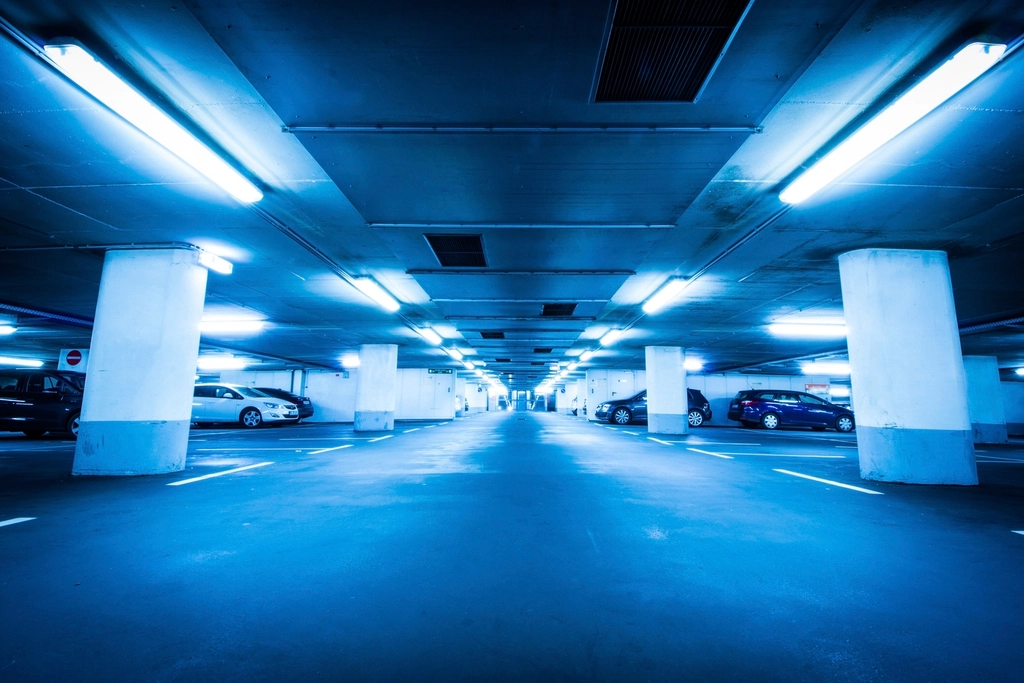
The ticket book was never built for this many cars
Walk into most mall basements or society gates in India on a busy evening and you'll see the same thing: a guard flipping through a carbon-copy ticket book, squinting at a handwritten in-time, and doing fee math on a calculator while five cars idle behind the boom barrier.
Nobody designed this system badly on purpose. Ticket books worked fine when twenty cars came and went in a day. They stop working the moment you have three entry points, four hundred vehicles, and a Saturday evening crowd that all wants to leave at once.
That's when the real cost shows up — not as a line item, but as a queue stretching past the exit ramp, a resident arguing that they were only there for fifteen minutes, and a manager who genuinely has no way to check who's right.
What actually goes wrong with manual parking operations
These aren't hypothetical problems. They show up the same way at almost every mall, society, and event venue that still runs parking on paper.
You have no idea how many slots are actually free
A shopper circles the basement three times looking for a spot that was vacated ten minutes ago but never got marked as free. Meanwhile the ground floor guard is turning cars away because his register says "full," even though level 2 has openings. Nobody has a single, current count.
Fee calculation is a guessing game under pressure
A visitor hands over a ticket stamped 2:15 PM. It's now 7:40 PM. The guard has to work out hours, apply the right slab, remember if it's a weekend rate, and do it all while three more cars honk behind. Small errors — undercharging, overcharging, forgetting a grace period — happen constantly, and they happen against the business, not for it.
Residents and visitors get mixed into the same pile
In a residential society, this is where committee meetings turn into arguments. Someone claims their guest was there for an hour; the register says something else, or says nothing at all because the entry was never logged properly. Without a clean, timestamped record separating resident vehicles from visitor vehicles, every dispute becomes a he-said-she-said with no evidence on either side.
Cash changes hands and some of it doesn't reach the account
This is the uncomfortable one. When fee collection depends on a guard collecting cash and writing a number on a slip, some of that cash quietly doesn't make it to the day's total. It's rarely large-scale theft — more often it's a handful of unrecorded transactions here and there. Over a month, across multiple gates, that adds up to real revenue leakage that never shows up in any report because there was never a report to begin with.
What good parking management software actually does
Parking software isn't about replacing guards with machines. It's about giving the same team a system that captures what's happening accurately, in real time, so decisions and disputes both have something solid to stand on.
Automated entry and exit capture
A camera or RFID reader logs the vehicle number and timestamp the moment a car enters or exits. No handwriting, no guessing the time, no ticket that can be lost or duplicated. The record exists the second the car crosses the gate.
Real-time slot availability across every gate
If the mall has three entry points and four levels, all of them read from the same live count. A car leaving level 2 updates availability instantly — so the ground floor guard isn't turning people away based on stale information, and a display board can actually tell shoppers where to go.
Fee rules that apply themselves
Slab rates, grace periods, weekend pricing, event-day surcharges — all of it gets set up once as a rule, and the system applies it automatically based on entry and exit time. The guard doesn't calculate anything; they just collect what the screen tells them to collect.
Prepaid and subscription passes for regulars
Residents, staff, and frequent visitors don't need to go through the ticket-and-fee cycle every single time. A monthly or seasonal pass tied to their vehicle number lets them move through the gate without a transaction at all, which speeds up traffic for everyone else too.
Occupancy and revenue reporting that actually means something
Instead of a stack of used ticket stubs, you get a report: how many vehicles came in, when peak occupancy hit, how much was collected, and whether that number matches the vehicle count. That last part — reconciling headcount against revenue — is exactly what closes the leakage gap.
Manual ticket books vs. parking management software
| Factor | Manual Ticket Books | Parking Management Software |
|---|---|---|
| Entry/exit speed | Slows down at peak hours; queues form fast | Automated capture keeps gates moving even at rush hour |
| Occupancy visibility | Guesswork, updated by memory or radio call | Live count visible across every gate and level |
| Fee accuracy | Manual math, prone to error and disputes | Rules applied automatically, same result every time |
| Revenue tracking | Cash handling with no reliable reconciliation | Every transaction logged and matched against vehicle count |
| Multi-location support | Each site keeps its own separate paper records | Centralized reporting across all properties from one dashboard |
Common mistakes when automating parking
- Buying software but keeping the old workaround habits. If guards still keep a manual backup register "just in case," you never get a clean data set.
- Not configuring fee rules properly on day one. Grace periods and weekend rates need to be set up correctly before go-live, not fixed after the first week of complaints.
- Ignoring staff training. A system is only as good as the person operating the handheld scanner or camera console at 9 PM on a Friday.
- Choosing a system that can't handle multiple gates from one dashboard. If each entry point runs in isolation, you're back to fragmented visibility.
- Skipping the resident/visitor distinction. Treating every vehicle the same defeats the purpose for a society that specifically needs to separate the two.
- Assuming it's only for permanent lots. Event venues that only need parking control for a weekend often skip automation and end up right back with a chaotic entry line.
What to look for in parking management software
Not every system built for a small single-gate lot will hold up under a mall's Saturday crowd or a society's mixed resident-visitor traffic. A few things worth checking before you commit:
It handles high vehicle turnover without slowing down
Ask how the system behaves when fifty cars try to exit in a ten-minute window. That's the real test, not how it looks on a quiet Tuesday afternoon.
It treats residents and visitors differently, by design
Not as an afterthought feature, but as a core part of how the system logs and reports data — because a society's needs and a mall's needs aren't the same.
It works across multiple gates and multiple locations from one place
If you run more than one property, or even just more than one entry point, you need one dashboard showing all of it together, not four separate logins.
Its reporting is actually usable
A report that just dumps raw numbers isn't much better than a ticket book. Look for reporting that shows occupancy trends, revenue by gate, and discrepancies worth investigating — without needing a spreadsheet expert to interpret it.
The properties that get the most out of parking automation aren't the ones with the fanciest hardware — they're the ones that actually configured their fee rules and trained their gate staff before going live. The software solves the visibility and math problems. The setup work is still on you.
Where this fits for malls, societies, and event venues
A mall dealing with exit-time bottlenecks needs speed and accurate slab billing across multiple entry points. A residential society needs a clean, indisputable log separating residents from visitors. An event venue needs something that can be set up fast for a single weekend and handle a sudden rush without falling apart.
These are different problems on the surface, but they come down to the same fix: replace the paper trail with a system that captures data automatically and reports on it honestly.
Kakshlink Technology's Parking Management software is built around exactly this — automated entry/exit ticketing, real-time slot availability, prepaid passes, automated fee calculation, and multi-location reporting, for malls, societies, and event venues alike. If you're dealing with any of the problems described above, it's worth a conversation. You can get a free quote and talk through your specific gate setup.
Frequently asked questions
Can it handle multiple gates in one property?
Yes. The system is designed to track occupancy and transactions across multiple entry and exit points at the same property, feeding into one live count and one combined report rather than treating each gate as its own island.
Does it distinguish resident vs visitor vehicles?
Yes. Resident and staff vehicles can be registered with passes and tracked separately from one-off visitor entries, so societies get a clean, timestamped log for both categories instead of one mixed pile of tickets.
Is it suitable for one-off events, not just permanent lots?
Yes. Event venues can set up parking management for a single event or a short run of dates, which matters when you're dealing with a sudden vehicle influx that a permanent gate setup was never sized for.
What does it cost?
Pricing depends on the number of gates, locations, and the specific features your property needs — a single-gate society setup and a multi-location mall chain won't cost the same. The most accurate way to get a number is to get a free quote with your actual requirements.